
Episode 333: Why Forced Transitions Dysregulate the Autistic Brain with Pete Wharmby
When autistic kids struggle, their difficulties are often treated as behavioral non-compliance or a lack of social desire, when it's often a direct mismatch with the learning environment. Adults routinely push these students into sensory-heavy spaces or force sudden task shifts, misunderstanding the neurological toll this takes on a differently wired nervous system. Pete Wharmby, an autistic author, former teacher, and late-diagnosed ADHDer, joins Emily Kircher-Morris to talk about what happens when schools and families learn to support rather than correct autistic ways of being.
TAKEAWAYS
Autistic behavior in schools is often pathologized and targeted for correction when it's likely a natural, necessary drive to decompress from sensory overload.
Monotropic focus operates like driving on a high-speed freeway, where abrupt task transitions resemble crashes and require gradual advance warning signs to exit safely.
Thin-slice judgments cause adults to mistake natural autistic communication, such as flat tone or lack of eye contact, for intentional rudeness or disrespect.
High academic performance can mask emotional distress, with deep exhaustion and low frustration tolerance serving as the real markers of masking.
Receiving late diagnoses of autism and ADHD often creates complex grief over missed accommodations and unmedicated years that could have prevented chronic burnout.
The doors to the Neurodiversity University Educator Hub are now open! Click here to join our collective of educators, administrators, and advocates, and let's build an education system that works for all students.
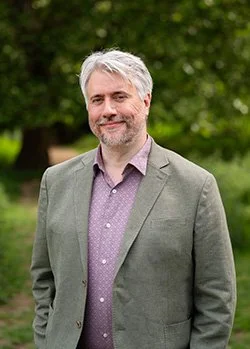
Pete Wharmby is an autistic and ADHD advocate, bestselling author, and international speaker dedicated to increasing understanding and acceptance of neurodivergence. Since his autism diagnosis in 2017 and ADHD diagnosis in 2024, Pete has worked with businesses, governments, schools, and organizations across the UK, Europe, Australia, and North America, sharing practical insights drawn from both lived experience and research.
Pete is the author of the bestselling books What I Want to Talk About, Untypical, and the forthcoming Different Minds. A former secondary English teacher, he is also a prolific writer whose work has appeared in articles, interviews, and book chapters, and he has been featured on BBC Radio 2. Through his speaking, writing, and social media platforms, where he reaches more than 150,000 followers, Pete continues to champion a more neurodiversity-affirming world.
BACKGROUND READING
Peter’s website, Facebook, Instagram
The Neurodiversity Podcast is on Facebook, Instagram, BlueSky, and you’re invited to join our Facebook Group. For more information go to www.NeurodiversityPodcast.com
If you'd like members of your organization, school district, or company to know more about the subjects discussed on our podcast, Emily Kircher-Morris provides keynote addresses, workshops, and training sessions worldwide, in-person or virtually. You can choose from a list of established presentations, or work with Emily to develop a custom talk to fit your unique situation. To learn more, visit our website.
Thank you for supporting neurodivergent people.