
Episode 326: The Evolution of Assessment: It's More Than Just a Score
As public understanding of neurodiversity continues to grow, evaluators face a shifting landscape when assessing clients whose traits don't match traditional, less nuanced pictures of autism. Many individuals—especially women and girls—learn to navigate daily social interactions through pattern recognition and learned strategies rather than intuitive processing, masking their traits enough to miss early identification. Dr. Jeremy Sharp, a licensed psychologist, founder of the Colorado Center for Assessment, and host of the Testing Psychologist Podcast, joins Emily to unpack the realities of camouflaging and what it takes to catch these less obvious presentations during a diagnostic evaluation.
TAKEAWAYS
The increasing prevalence of self-identification and online research requires evaluators to look beyond traditional, high-support presentation models when assessing for autism.
Camouflaging and masking rely on active cognitive problem-solving and pattern recognition rather than intuitive social processing, creating high internal fatigue that standard testing environments can miss.
Structured, one-on-one assessment settings can artificially boost a person's immediate social performance, making ambiguous or unstructured interactions essential during clinical observations.
Traditional assessment tools like the ADOS can be less sensitive when evaluating females, who often demonstrate higher surface social fluency and culturally common special interests.
Arriving at an accurate diagnostic picture requires gathering broad collateral information from parents, partners, and teachers rather than relying on a single test score.
You can register now for our upcoming continuing education course for mental health professionals, Clinical Implications of Late-Identified Neurodivergence: Strategies for Identity Integration and Therapeutic Support. The course will be presented by Dr. Amy Marschall, author of the book Neurodiversity-Affirming Therapy, and will be available both as a live event on Friday, August 7 from 2:00 - 3:30 PM Eastern, 11:00 AM - 12:30 PM Pacific, and afterwards in video form. Both versions are worth 1.5 hours of APA and NBCC-approved CE credits. Register here.
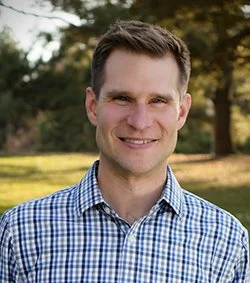
Dr. Jeremy Sharp is a licensed psychologist and Director at the Colorado Center for Assessment, a multimillion-dollar private practice that he founded in 2009. He specializes in psychological and neuropsychological evaluation with kids and adolescents.
As the host of the Testing Psychologist Podcast and consultant for clinicians, Dr. Sharp provides private practice coaching for psychologists and other mental health professionals who want to start or grow assessment services in their practices.
In 2020, Dr. Sharp partnered with a seasoned software developer to co-found Reverb, the premier AI report-writing platform for testing psychologists that helps clinicians write faster, better reports and get their time back for what matters most.
Dr. Sharp earned his undergraduate degree in Experimental Psychology from the University of South Carolina before getting a Master’s and PhD in Counseling Psychology from Colorado State University. He lives in Fort Collins, Colorado with his wife (also a therapist) and two teenagers.
BACKGROUND READING
Jeremy’s website, Testing Psychologist podcast, Facebook, LinkedIn
The Neurodiversity Podcast is on Facebook, Instagram, BlueSky, and you’re invited to join our Facebook Group. For more information go to www.NeurodiversityPodcast.com
If you'd like members of your organization, school district, or company to know more about the subjects discussed on our podcast, Emily Kircher-Morris provides keynote addresses, workshops, and training sessions worldwide, in-person or virtually. You can choose from a list of established presentations, or work with Emily to develop a custom talk to fit your unique situation. To learn more, visit our website.