
Episode 319: Deconstructing Gifted Burnout
When highly capable children spend years cruising through an educational system where academic rigor is geared toward the average, they fail to develop the neurological muscles required to process difficulty. This week, we present an encore chat with Dr. Brian Housand, coordinator of the academically or intellectually gifted program at the University of North Carolina Wilmington, and Andi McNair, a gifted education author and digital innovation specialist.
They discuss how burnout can be a result of long-term exposure to unrealistic expectations and a profound fear of failure, and how it can also manifest in a sort of imposter phenomenon among high-ability learners. They explain why teachers and parents should resist the urge to rescue high-ability kids from cognitive discomfort, instead allowing space for productive struggle.
TAKEAWAYS
Equating intelligence with "quick and easy" creates a highly fragile academic identity that collapses the moment a learner encounters an authentic cognitive challenge.
The feeling of ineffectiveness that comes with burnout often stems from an internalized need for external validation.
Depriving high-ability students of productive struggle prevents them from building coping mechanisms and adaptive emotional resilience.
High-ability learners sometimes experience a profound sense of isolation, which can be minimized by structuring shared spaces to foster a sense of universality.
Gifted burnout in adults sometimes signals an unidentified twice-exceptional presentation, where early compensation strategies have finally been overwhelmed by adult executive demands.
Perfectionism can be difficult to identify in therapy, and once identified, still very difficult to overcome. If you're a mental health professional, join us for Overcoming Perfectionism in Therapy: Supporting Neurodivergent Clients Who Keep Moving the Finish Line. Matt Zakreski will present this 1.5 hour continuing education course this Friday, June 5th at 1:00 pm Central, and if you can't join us live, that's okay. The video will be available afterward for anyone who registers, and either version is APA and NBCC approved for 1.5 hours of continuing education credit. Register now or learn more at this link, or just go to neurodiversity.university.

Dr. Brian Housand is the coordinator of the Academically or Intellectually Gifted program at University of North Carolina Wilmington, and creator of Gifted360.com. He is also a published author and speaker, and has worked in education as a classroom teacher, gifted ed teacher, and university professor for over 20 years.
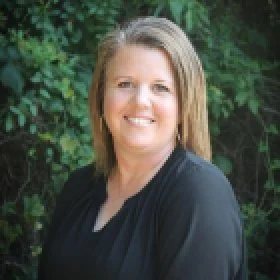
Andi McNair is a passionate educator, author and speaker. Andi taught in the gen-ed classroom for 16 years, and then switched to serving gifted learners where she found her calling. She enjoys sharing her passion for innovative education through her books for educators, speaking nationally, and finding meaningful ways to use technology. Andi currently works as the Digital Innovation Specialist in a Waco, Texas school district.
BACKGROUND READING
Brian Housand's website, BH Facebook, BH Twitter/X, BH Instagram
Andi McNair's website, AM Facebook, AM Twitter/X, AM Instagram
The Neurodiversity Podcast is on Facebook, Instagram, BlueSky, and you’re invited to join our Facebook Group. For more information go to www.NeurodiversityPodcast.com
If you'd like members of your organization, school district, or company to know more about the subjects discussed on our podcast, Emily Kircher-Morris provides keynote addresses, workshops, and training sessions worldwide, in-person or virtually. You can choose from a list of established presentations, or work with Emily to develop a custom talk to fit your unique situation. To learn more, visit our website.