
Episode 324: The Right to Be Heard: Reclaiming Communication Autonomy
The baseline premise of Augmentative and Alternative Communication (AAC) rests on the fundamental principle that communication is an inherent human right rather than a privilege to be earned through baseline cognitive compliance. Too often, school systems and clinical providers inadvertently stall access to verbal alternatives by requiring non-speaking students to prove communicative readiness or complete repetitive testing metrics.
Brenda Del Monte, an AAC specialist and author, alongside Sarah Kinsella, an assistive technology specialist, join Emily Kircher-Morris to discuss ways to reverse this traditional framework. They work to dismantle the clinical assumptions that hinder expressive access.
TAKEAWAYS
Communication should be an absolute human right that must be provided without pre-qualifying conditions, compliance mandates, or prerequisites of demonstrated cognitive readiness.
Implementing top-down testing protocols on assistive devices turns natural expression into an artificial performance.
The usage of hand-over-hand physical guidance to steer a student's selection on an assistive device overrides physical autonomy and lessens authenticity.
Changing communicative environments requires a baseline differentiation between a user's current physical selection skills and their potential capabilities.
Introducing descriptive, speech-generating tools does not reduce a child's internal drive to develop natural verbal language, and actively enhances social interaction.
Our latest CE course for mental health professionals is available now online. It's called The New 3 Rs: Mindfulness-based Resilience, Regulation, and Relationships, and is facilitated by Dr Christopher Willard. In this course, we explore how resilience develops, what stress and overwhelm do to the developing nervous system, and why relational safety is not simply a nice addition to an intervention. The training video is available now, and is worth 1.5 APA- and NBCC-approved CE hours. Click here to take the course now.
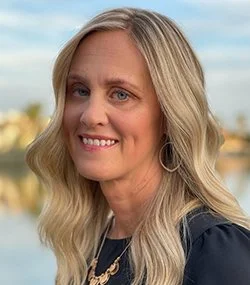
Brenda Del Monte is a speech language pathologist and an assistive technology evaluator and facilitator. She worked as an SLP in Washington state public schools for 7 years. She is currently a private practitioner in AZ where she does home based therapy, as well as AAC evaluations and trainings. Her background includes experience in the medical setting, private setting and birth-to-three. Her role at SETC involves teaching webinars and classes, creating video tutorials, and collaborating with districts on implementing assistive technology with children with a wide range of physical and cognitive abilities. She published the book I See You In There in October 2021.
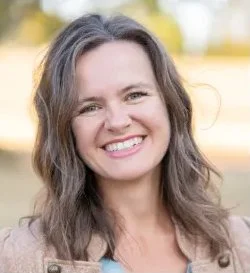
Sarah Kinsella is a Speech-Language Pathologist (SLP) passionate about empowering students with complex communication and learning needs through Augmentative and Alternative Communication (AAC). Holding a Master’s degree in Speech, Language, and Hearing Sciences, Sarah has been providing support and training to children (birth-21), their families, and educators in WA state for nearly two decades. She currently works for the Special Education Technology Center (since 2015) where, in addition to providing technical assistance and training, she co-hosts and develops content for the "Awe and Wonder AAC & AT Podcast". Her background includes 11 years as a public school SLP, serving 6 of those years as district Assistive Technology (AT) Specialist.
BACKGROUND READING
Special Education Technology Center website, SETC on Facebook, Brenda’s Technically Speaking website, Technically Speaking on Instagram, Technically Speaking on YouTube
The Neurodiversity Podcast is on Facebook, Instagram, BlueSky, and you’re invited to join our Facebook Group. For more information go to www.NeurodiversityPodcast.com
If you'd like members of your organization, school district, or company to know more about the subjects discussed on our podcast, Emily Kircher-Morris provides keynote addresses, workshops, and training sessions worldwide, in-person or virtually. You can choose from a list of established presentations, or work with Emily to develop a custom talk to fit your unique situation. To learn more, visit our website.